



Derechos de autor 2025 Memorias

Esta obra está bajo una licencia internacional Creative Commons Atribución-NoComercial-CompartirIgual 4.0.
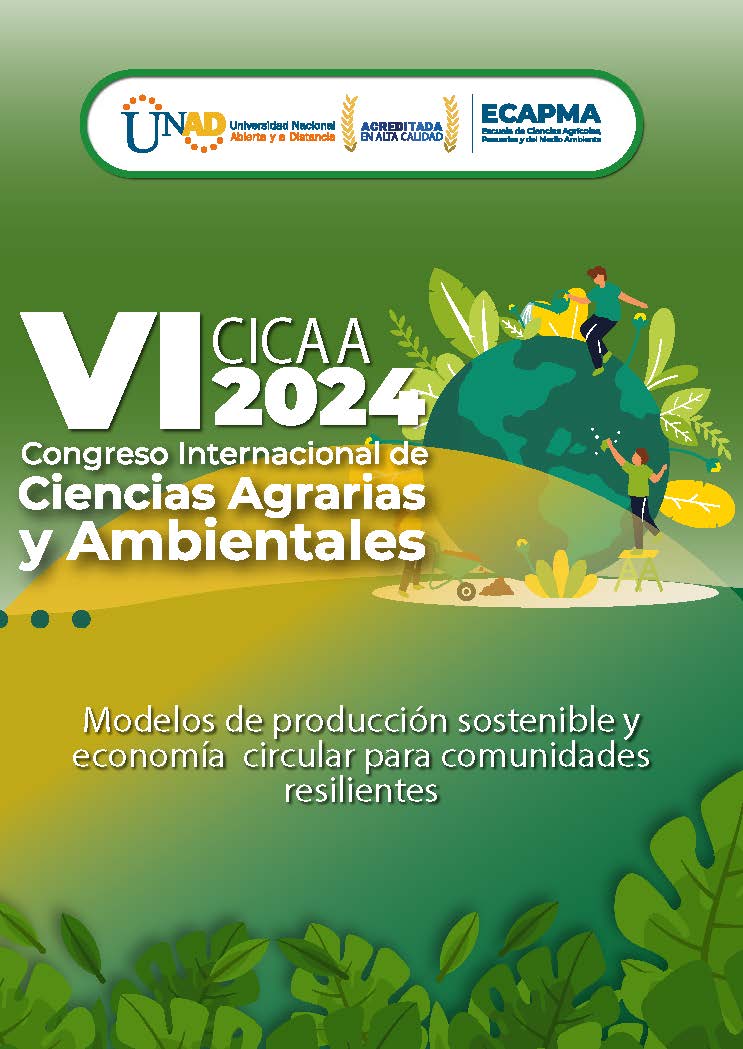
VI Congreso Internacional de Ciencias Agrarias y Ambientales
La publicación recopila investigaciones, reflexiones y experiencias en torno a tres ejes temáticos: modelos de producción sostenible, economía circular y comunidades resilientes.
En la sección de Modelos de Producción Sostenible, se presentan estudios que comparan sistemas agroforestales versus monocultivos, destacando su impacto en la microbiota del suelo, así como investigaciones sobre el control de enfermedades en cultivos como papayuela, papa, cacao y café. Se abordan también prácticas de polinización con abejas nativas, el uso de microorganismos funcionales como biofertilizantes, y el manejo fitosanitario con enfoque en pequeños productores.
La sección de Economía Circular incluye propuestas para el aprovechamiento de subproductos del cacao, estrategias de gestión de residuos en cultivos de plátano, y estudios sobre biorremediación de suelos contaminados con glifosato. También se exploran innovaciones tecnológicas como sistemas de trazabilidad mediante IoT y software especializado para garantizar la inocuidad y calidad de los alimentos.
En Comunidades Resilientes, se destacan investigaciones sobre sistemas agrícolas tradicionales liderados por mujeres indígenas en la Amazonia, la conservación de agrobiodiversidad, el fortalecimiento de la identidad cultural campesina y la gobernanza ambiental en ecosistemas estratégicos como los páramos. Se enfatiza el papel del conocimiento ancestral y la organización comunitaria en la construcción de resiliencia socioecológica.
La publicación refleja un esfuerzo interdisciplinario por integrar el conocimiento científico con el saber local, promoviendo prácticas agrícolas sostenibles, innovación tecnológica accesible y estrategias de adaptación al cambio climático. Además, evidencia el compromiso de la UNAD con la investigación aplicada y la proyección social en zonas rurales de Colombia, aportando al desarrollo territorial con enfoque de sostenibilidad y justicia ambiental.
El documento concluye con la convicción de que la articulación entre ciencia, tecnología y comunidades es fundamental para transitar hacia sistemas alimentarios más resilientes, inclusivos y en armonía con los ecosistemas.